A Minnesota bicycling adventure with larger than life roadside attractions

We recently completed a four-day bicycling trip in Minnesota – the BAM (Bicycling Around Minnesota). It was a fun and challenging four days of riding. This year’s ride had 250 cyclists, ranging in age from 24 to 84, all coming together to be immersed in the scenery and sights of the northwestern lakes of Minnesota. We’ve found that bicycling is a great way to see the countryside, as opposed to driving on interstates or flying high above. On a bicycle seat you become part of the terrain, and can easily stop to see sights and talk with locals.

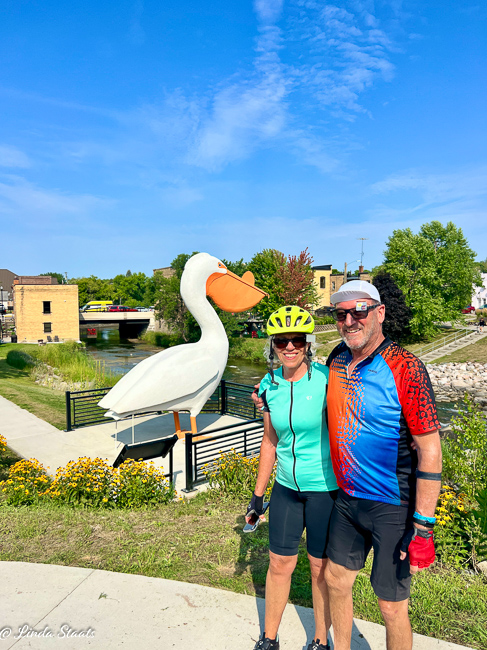
We started the ride in the city of Detroit Lakes with a 52 mile loop past cabins and lake homes on both Detroit and Pelican Lakes. Minnesota lays claim to over 10,000 lakes, and these two large bodies of water captured “lake life.” Day two was a 57 mile ride from Detroit Lakes to Fergus Falls, riding through the town of Pelican Rapids, home to Pelican Pete – the world’s largest pelican, standing 15.5 feet tall. Pete was built in 1957 and overlooks the Pelican River. He was a perfect “excuse” to stop and rest, appreciate the river and park, and get ready for the hills (and headwinds) that were waiting for us on our journey south to Fergus Falls.

The third day was 63 miles from Fergus Falls to Perham. The morning started with clouds and light showers left over from the overnight rainstorm that had rolled through the area. But the sun broke through the clouds in the late morning. We were lucky to take in the annual Corn Daze celebration in the small community of Dent – free corn, a parade, and a classic car show. In Perham we were camped at the fairgrounds next to Tuffy Stadium. The stadium is home to the Perham Pirates, the town baseball club that was playing New York Mills and Urbank that afternoon and evening. We drifted off to sleep hearing the crack of the bat and the announcer calling the game.

Day four gave us 35 miles to ride from Perham back to our beginning point in Detroit Lakes. The day dawned bright and cooler, and there were two important stops to make along this shorter route. The first was at the big loon in the town of Vergas. Standing 20 feet tall and overlooking Long Lake, it was built in 1963 by the Vergas Fire Department to honor a former town postmaster. The loon is Minnesota’s state bird, so this stop was even more appropriate. But there was one more aviary roadside attraction waiting up the road for us – the world’s tallest turkey.

The town of Frazee is one of the largest producers of turkeys in Minnesota. So it was only fitting that they have a 22 foot tall turkey. Known as Big Tom II and weighing nearly three tons, he replaced the first Big Tom who met an untimely death by fire in 1998. The current Big Tom is said to have 4,000 individual fire-resistant feathers (obviously they’re not looking for a repeat of the first Big Tom’s demise).

If we had been traveling by car we probably wouldn’t have detoured off our route for these roadside attractions. And yet there’s something interesting and unique about the statues that represent a community, that give them an identity, and certainly give them bragging rights and something to boast about.

207 miles, four nights of camping in a tent, lots of laughs, shared stories, many meals, multiple ice cream stops, and three more “quirky” roadside attractions to add to my list – it all made for a wonderful trip!
Michigan bicycling

After a full day of driving from northern Wisconsin, we traded our car wheels for bicycle wheels (and a ferry ride) to explore parts of Michigan. For the next six days of riding we enjoyed new friends, new sights and scenery, new bike trails, and local foods.

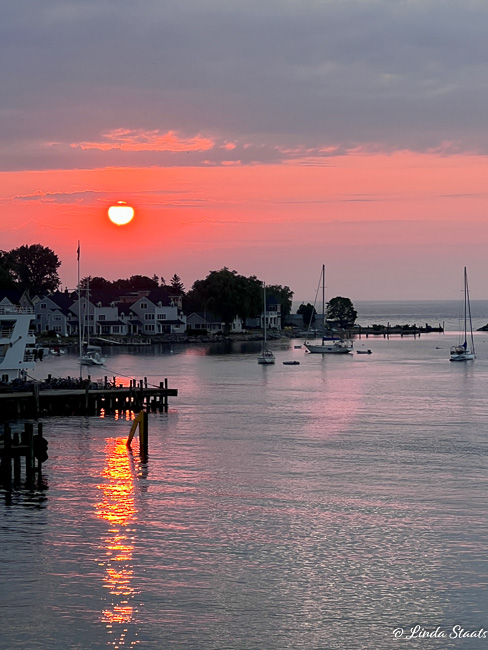
We started with a ride on the North Central State Trail taking us to the tip of the mitten, or the tip of the mainland of Michigan. A short ferry ride took us and our bikes to Mackinac Island which is surrounded by the Straits of Mackinac and Lake Huron. The early mornings were truly amazing as the sun rose over the bay. Unique to this island, cars and motorized vehicles were banned in 1898. The three main modes of transport are on foot, on bicycle, and via horse carriages and carts. Victorian architecture abounds, as do hanging baskets of flowers, and numerous fudge shops (even more of a reason to put in the bike miles!). We rode the shoreline route called M-185 around the island. This is a state highway, yet it is the only highway in the country that doesn’t allow motorized vehicles. There were plenty of sites to explore including Fort Mackinac which was originally founded by the British in 1780, later transferred to the Americans, then captured by the British, and eventually returned to the United States after the War of 1812.

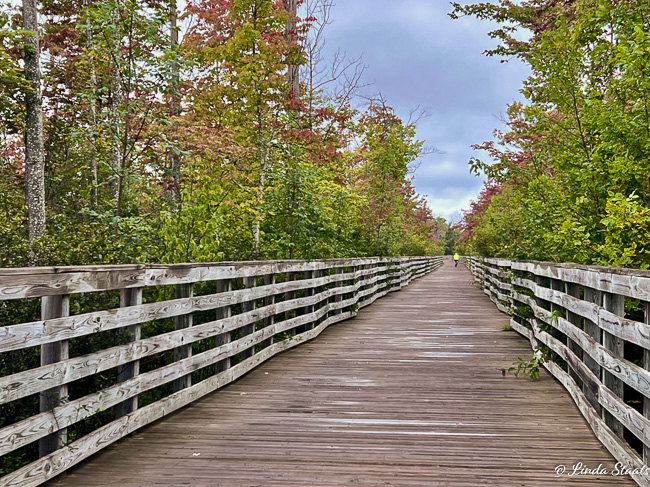
With a ferry ride back to the mainland, we continued riding south and west, following the shoreline of Lake Michigan. On a cool and cloudy morning we left Petoskey and followed the Little Traverse Wheelway to Charlevoix. The boardwalk section of the trail was a great change from the pavement, and we were far enough north to see peaks of fall color showing in the trees. As luck would have it, the rain held off and we remained dry.

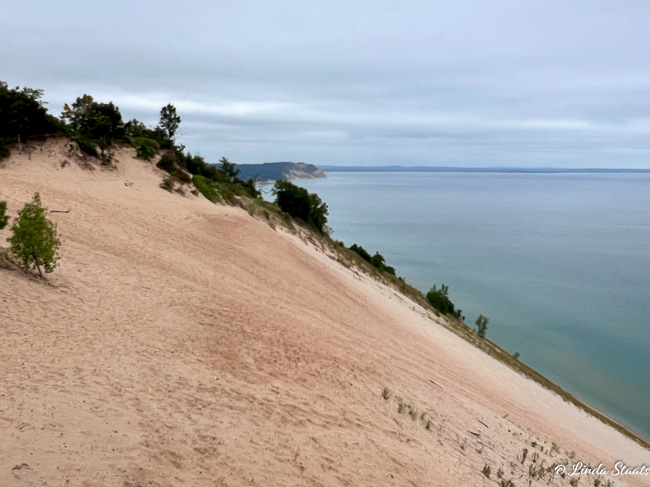
Our cycling climbing ability was put to the test as we continued south into Sleeping Bear Dunes National Lakeshore. With twists and turns, slow climbs uphill followed by quick downhills, we rode through the forests and around the wetlands, lakes, rivers, and dunes that make up this park. To see a sand dune over 1,000 feet tall that descends straight down to the shore of Lake Michigan is truly amazing. Here the landscape is constantly changing from wind and wave action.

These parts of Michigan are known for their cherries and peaches. After a long day’s ride it was a welcome treat to enjoy cherry pie and peach shortcake, both served by obligation with vanilla ice cream! Our ride took us further south along the Lake Michigan shoreline past lakes and small villages, eventually ending our trip in Beulah along the shore of Crystal Lake. With a sense of accomplishment and a new appreciation for the beauty of the area, we traded our bicycles in for car wheels for the return trip home.

A century ride to mark the close of summer

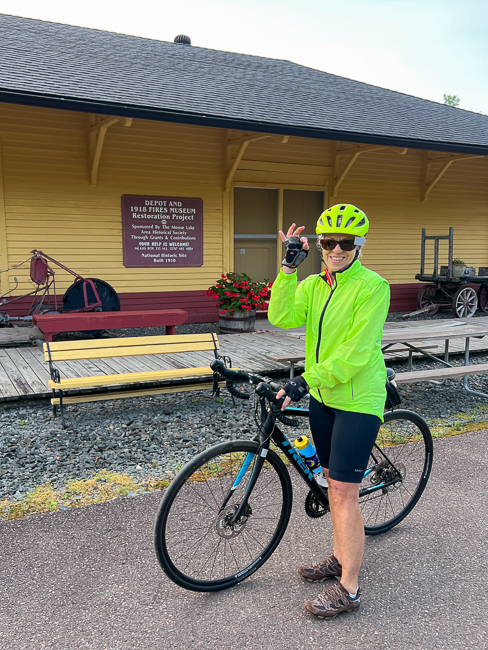
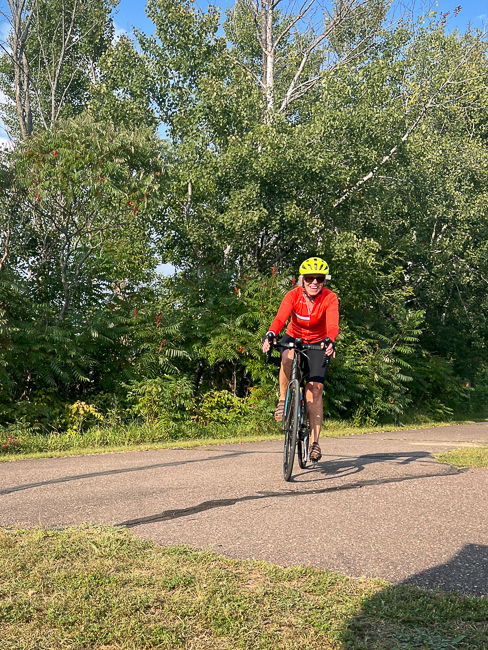
A century ride is a bicycle ride of 100 miles. I decided this was my summer to earn this cycling badge and I chose the paved, multiple use Willard Munger Trail in east central Minnesota for my ride. On Tuesday, August 29th at 7:45 in the morning I set out on my trusty Trek Domane ALR4 heading north, leaving from the old train depot and fire museum in Moose Lake, Minnesota – mile zero. It was a cool morning with a lovely blue sky and promise of highs in the mid-70’s. By starting early I was planning to beat the northeast winds that were to develop as the day warmed up. The early miles were lovely and I had the trail to myself. My husband Greg was my support, in so many ways, and he joined me for a few miles of riding for encouragement and conversation.

After a lunch break in Carlton and rides to the east into the town of Wrenshall and into Jay Cooke State Park, it was time to head back the way I came. By 12:30 I was at the 50 mile mark, the winds were picking up a bit but now they were a tailwind, helping to push me to the finish line.

My legs felt good, my bike was doing great, and the miles were slowly adding up. Multiple stops during the second half of the ride were necessary for liquids and food – I’m amazed at how necessary it was to hydrate and refuel. 60 miles, 70 miles, 80 miles, 90 miles – they all required a celebration with a whoop and a holler as my goal was getting closer and closer. At about 5:15 I rounded the last corner of the trail and pulled into the parking area in Hinkley, Minnesota. With a smile on my face I looked at my cyclometer and saw that I’d ridden 102.5 miles (okay – a couple miles extra just because???). Greg was there to greet me with a sign marking my achievement, a celebratory big chocolate cupcake, and a car to get back to our campsite. I’m proud of planning, training, and accomplishing my goal, and I can honestly say it was a great adventure!

All photos courtesy of Greg Buzicky.

A biking adventure on the Katy Trail

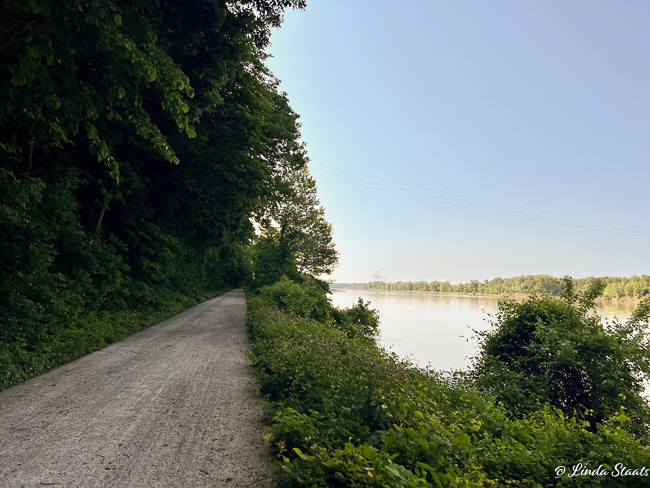
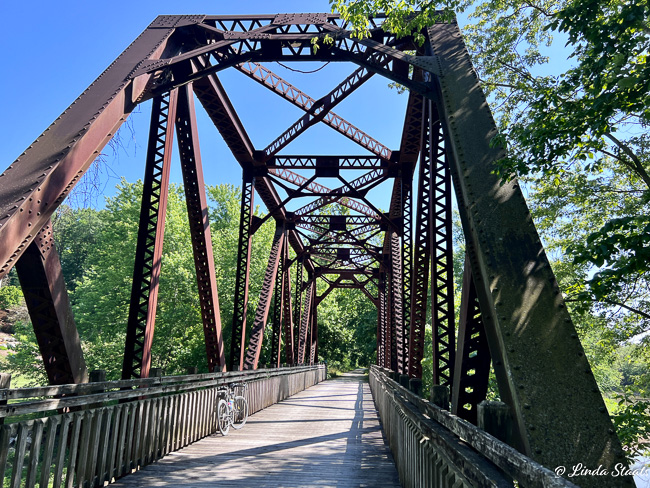
We’ve just returned from a six-day biking adventure on the Katy Trail in central Missouri. The Katy Trail State Park was opened in 1990 and is the longest continuous rail trail in the United States at 240 miles. It was built along the rail route of the Missouri-Kansas-Texas (MKT) Railroad, and was commonly called the Katy. The trail itself is crushed limestone, and after riding six days with no rain we found we were covered in a light coating of dust! Many miles of the trail follow the route of the Missouri River with large limestone bluffs towering above the river. We learned much about the history of the area via trail markers telling us of Lewis & Clark’s travels along this route, and information about Daniel Boone and his family who once lived in the region.

We took spur trails into Jefferson City and Hermann, giving us easy access to food and lodging. In other places, like Sedalia and St. Charles, the trail passed right through the commercial areas. We found old train depots and a multitude of bridges of various types. We rode along cornfields and under canopies of trees. We saw cardinals flying across the trail and turtles slowly working their way from one side to the other. With a light wind we could smell the honeysuckle blooming nearby. It’s a popular trail that is shared by cyclists, walkers, and even horses.

Like other cross-state rides we’ve done, it was the perfect way to see the countryside and appreciate the beauty and uniqueness of the area.

A trip south to escape our long winter

Our Northern winter keeps coming with record amounts of snowfall and colder days than usual. This year we decided to escape the cold and head south. The morning we left the temperature hovered in the teens with bright sunshine glistening off the frozen ice on the trees. Crossing from Minnesota into Iowa brought us less snow. By southern Missouri we found blooming daffodils, and by northeastern Texas we saw redbud trees in bloom. With each passing state the temperatures were warmer and our smiles were bigger.

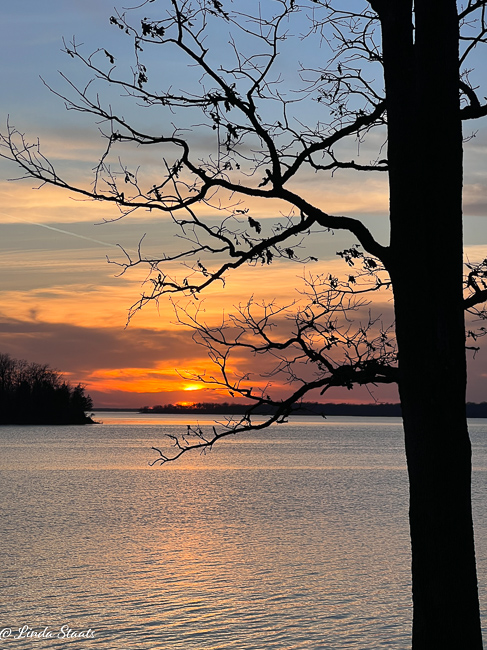
We experienced spring thunderstorms with heavy rain, and even a tornado warning. We rode our bikes in warm sunshine and in blustery winds. We sat outside without heavy coats, hats and gloves. We watched the sun set over open water. We reveled in green grass and the flowers and trees. It was a welcome assault to our senses to be surrounded by the colors of spring and the sounds of birds.

Dogwood trees were in full bloom, their blossoms so delicate and bright. We were talking to another cyclist (also from the North) who couldn’t contain her excitement over seeing tulips in bloom. That sent us on a driving trip to Garvan Woodland Gardens in Hot Springs, Arkansas. We spent two hours soaking up the colors of tulip blooms – every color imaginable! We would pinch ourselves and then look at the weather app showing the temps back north in the 20’s and yet another snowfall.

After three weeks we began our journey back home. A cold front had dropped way south out of Canada and we had temperatures below freezing for the journey north. Our winter clothes and coats came back out of the closet and as we drove the season reversed back into late winter. We arrived home with more snow on the ground than when we left, but our minds were filled with the beauty of spring and the knowledge that eventually the warmth will return here too, bringing the colors and sights that we had absorbed on our trip.